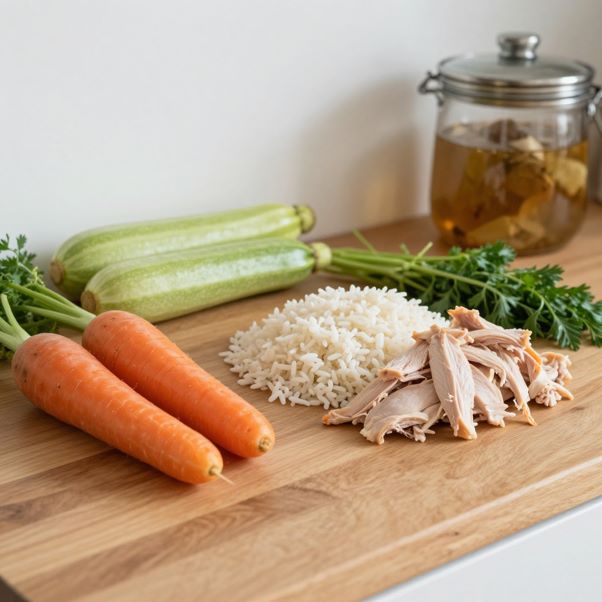
Low effort chicken rice soup is one of those simple, calming meals that can be useful when your digestion feels unsettled, your energy is low, or you want something nourishing without too much preparation. It is warm, gentle, flexible and easy to adapt depending on what your gut currently tolerates.
For people dealing with bloating, food sensitivities, digestive discomfort or a restricted diet, meals can start to feel complicated. You may worry about what to eat, what might trigger symptoms, or whether a new food is going to set you back. This is why a recipe like low effort chicken rice soup can be so helpful. It gives you a balanced meal with protein, carbohydrate, fluid and vegetables in a soft, easy to eat format.
This low effort chicken rice soup also fits beautifully with a long term immune tolerance approach. It focuses on adding gentle nourishment rather than removing more foods. You can begin with the simplest version, then gradually increase variety by rotating vegetables, adding herbs, or changing the grain when your digestion feels ready.
If you are based in the United Kingdom, Europe or working with me online, this kind of recipe can be adapted to your food preferences, tolerance level and daily routine. It is also a practical batch cook option for busy weeks, low energy days or times when you want a safe, nourishing meal ready in the fridge or freezer.
Why Low Effort Chicken Rice Soup Works for Sensitive Digestion
Low effort chicken rice soup works well because it is simple, soft and balanced. The chicken provides protein, which supports repair, energy and satiety. The rice provides a familiar carbohydrate source that many people find easier to tolerate than heavier grains. The vegetables add colour, minerals and gentle fibre, while the warm broth adds fluid and comfort.
This recipe is not designed to be a strict therapeutic diet. It is a practical meal idea for people who need something manageable. It can be made with basic supermarket ingredients, prepared in one pot and adjusted depending on symptoms.
If you are rebuilding food confidence after a period of restriction, low effort chicken rice soup can also be a useful reintroduction style recipe. You can keep the base ingredients stable, then introduce one new vegetable, herb or seasoning at a time. This makes it easier to notice what suits your body.
Recipe Overview
Serves: 4
Preparation time: 10 minutes
Cooking time: 30 to 35 minutes
Best for: Lunch, dinner, batch cooking, gentle meal preparation
Dietary notes: Naturally dairy free and can be made gluten free if you use a gluten free stock
Ingredients
- 1 tablespoon olive oil
- 2 medium carrots, peeled and diced
- 2 celery sticks, finely sliced, optional if tolerated
- 1 small courgette, diced
- 1 cup cooked chicken, shredded, or 2 small chicken breasts
- ½ cup white rice or basmati rice, rinsed
- 1.2 litres chicken stock or vegetable stock
- 1 bay leaf, optional
- ½ teaspoon dried thyme or mixed herbs
- 1 small handful fresh parsley, chopped
- Salt and black pepper to taste
- Juice of ½ lemon, optional and only if tolerated
- Extra water if you prefer a thinner soup
Optional Additions
- A handful of spinach stirred in at the end
- A small amount of grated ginger for warmth
- A pinch of turmeric for colour
- A spoonful of cooked peas if tolerated
- A drizzle of olive oil before serving
- Cooked rice instead of uncooked rice if you want an even quicker version
Need to Know
Low effort chicken rice soup is very adaptable. If your digestion is sensitive, start with fewer ingredients. Carrot, rice, chicken and stock can be enough for the first version. Once tolerated, you can add courgette, parsley, spinach or other vegetables.
If onion and garlic trigger symptoms for you, leave them out. You can add flavour with herbs, parsley, bay leaf, ginger or garlic infused olive oil if tolerated.
If you are in a food reintroduction phase, keep the recipe simple and only change one ingredient at a time. For example, make the soup with carrot and rice first. The next time, add courgette. Later, try parsley or spinach. This helps you track tolerance more clearly.
If you are sensitive to histamine, freshly cooked chicken may be better tolerated than long stored leftovers. Cool and freeze extra portions promptly if this is relevant to you.
If you are using shop bought stock, choose one with simple ingredients where possible. Some stocks contain onion, garlic, yeast extract or flavourings that may not suit everyone.
If your appetite is low, add a little extra olive oil before serving for more energy. If you need a lighter soup, add more water or stock.
Step by Step Method
- Warm the olive oil in a large saucepan over a medium heat.
- Add the carrots, celery if using, and courgette. Cook gently for 5 minutes, stirring often, until the vegetables begin to soften.
- Add the chicken. If using cooked chicken, stir it through the vegetables. If using raw chicken breasts, place them whole into the pan.
- Add the rinsed rice, stock, bay leaf and dried herbs.
- Bring the soup to a gentle simmer.
- Cover the pan and cook for 25 to 30 minutes, or until the rice is soft and the chicken is cooked through.
- If you used whole chicken breasts, remove them from the pan, shred with two forks, then return the shredded chicken to the soup.
- Stir in spinach if using and cook for another 2 minutes until wilted.
- Add parsley and lemon juice if tolerated.
- Taste and season with salt and pepper as needed.
- Add extra water or stock if you prefer a thinner soup.
- Serve warm with a drizzle of olive oil if desired.
Practical Nutrition Notes
Low effort chicken rice soup gives you a simple balance of protein, carbohydrate, vegetables and fluid in one bowl.
Chicken provides protein, which helps support normal tissue repair and keeps the meal more satisfying. Rice provides a gentle carbohydrate source that can be useful when appetite is low or digestion feels unsettled. Carrots and courgettes add colour and soft fibre without making the soup feel too heavy.
The broth based format can also be helpful because it adds fluid. Many people with digestive symptoms forget how important hydration is, especially if constipation is part of the picture.
This recipe can also support plant diversity in a gentle way. You do not need to add lots of vegetables at once. Even rotating one or two vegetables over time can help build variety. For example, you might use carrot and courgette one week, then carrot and spinach the next week, then carrot and parsnip another time.
The goal is not to create the most adventurous soup immediately. The goal is to build a meal that feels safe, nourishing and realistic.
How to Adapt This Low Effort Chicken Rice Soup
If you need a softer texture, cook the soup for a little longer until the rice and vegetables are very soft. You can also partially blend the soup before adding shredded chicken back in.
For more protein, add extra chicken or stir in a beaten egg at the end while the soup is simmering gently.
Should you prefer a vegetarian version, swap chicken for firm tofu or well rinsed tinned chickpeas if tolerated, and use vegetable stock.
If you want more plant diversity, add small amounts of spinach, parsley, peas, parsnip, butternut squash or fresh herbs. Add one at a time if you are tracking symptoms.
For a more filling meal, serve with gluten free bread, sourdough if tolerated, or a side of roasted potatoes.
Should you want a lower fibre version, peel the vegetables, use white rice and avoid adding legumes or too many greens.
If you want more flavour without spice, use thyme, parsley, bay leaf, lemon zest or a small drizzle of olive oil.
Why This Recipe Fits Immune Tolerance Support
An immune tolerance approach often focuses on gradual, consistent nourishment rather than extreme restriction. Low effort chicken rice soup supports this because it gives you a stable base meal that can be expanded slowly.
When someone has been reacting to multiple foods, it is common to become fearful of variety. This soup allows variety to be introduced in a controlled way. You can keep the same base and rotate one new ingredient at a time.
For example:
Version one could include chicken, rice and carrots.
Version two could add courgette.
Version three could add parsley.
Version four could add spinach.
Version five could try a different herb.
This approach is especially useful for people who need to track symptoms and build food confidence gradually. It also supports the idea that food reintroduction should be structured, calm and personalised.
Get personalised gut health support
Storage and Batch Cooking Tips
Low effort chicken rice soup is ideal for batch cooking. Once cooked, allow the soup to cool, then store it in airtight containers.
Keep in the fridge for up to 2 days, or freeze portions for up to 3 months.
Rice continues to absorb liquid as it sits, so the soup may thicken after storage. Add extra water or stock when reheating.
When reheating, make sure the soup is steaming hot throughout. Do not reheat the same portion multiple times.
If you are sensitive to leftovers, freeze portions as soon as they are cool and reheat from frozen when needed.
When This Recipe May Need Personalising
Low effort chicken rice soup is gentle for many people, but no recipe suits everyone.
You may need to adapt this recipe if you have histamine sensitivity, irritable bowel type symptoms, inflammatory bowel disease, coeliac disease, food allergies, swallowing difficulties, diabetes, kidney disease or a medically restricted diet.
You may also need personalised support if you are unsure which vegetables to include, how to reintroduce foods, or how to avoid nutritional gaps while managing food sensitivities.
If your diet has become very limited, working with a practitioner can help you expand safely and confidently.
Final Thoughts
Low effort chicken rice soup is simple, comforting and practical. It is the kind of recipe that can support you on days when you want nourishment without complexity.
It offers protein from chicken, gentle carbohydrate from rice, soft vegetables for colour and fibre, and warm broth for comfort and hydration. It can be made simply when digestion is sensitive, or gradually expanded as tolerance improves.
For anyone working on food confidence, immune tolerance or digestive resilience, low effort chicken rice soup can become a helpful foundation meal. It reminds us that supportive eating does not need to be complicated. Sometimes the most useful meals are the ones you can make easily, tolerate well and return to again and again.