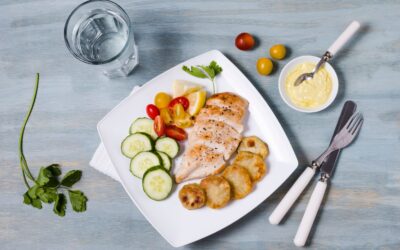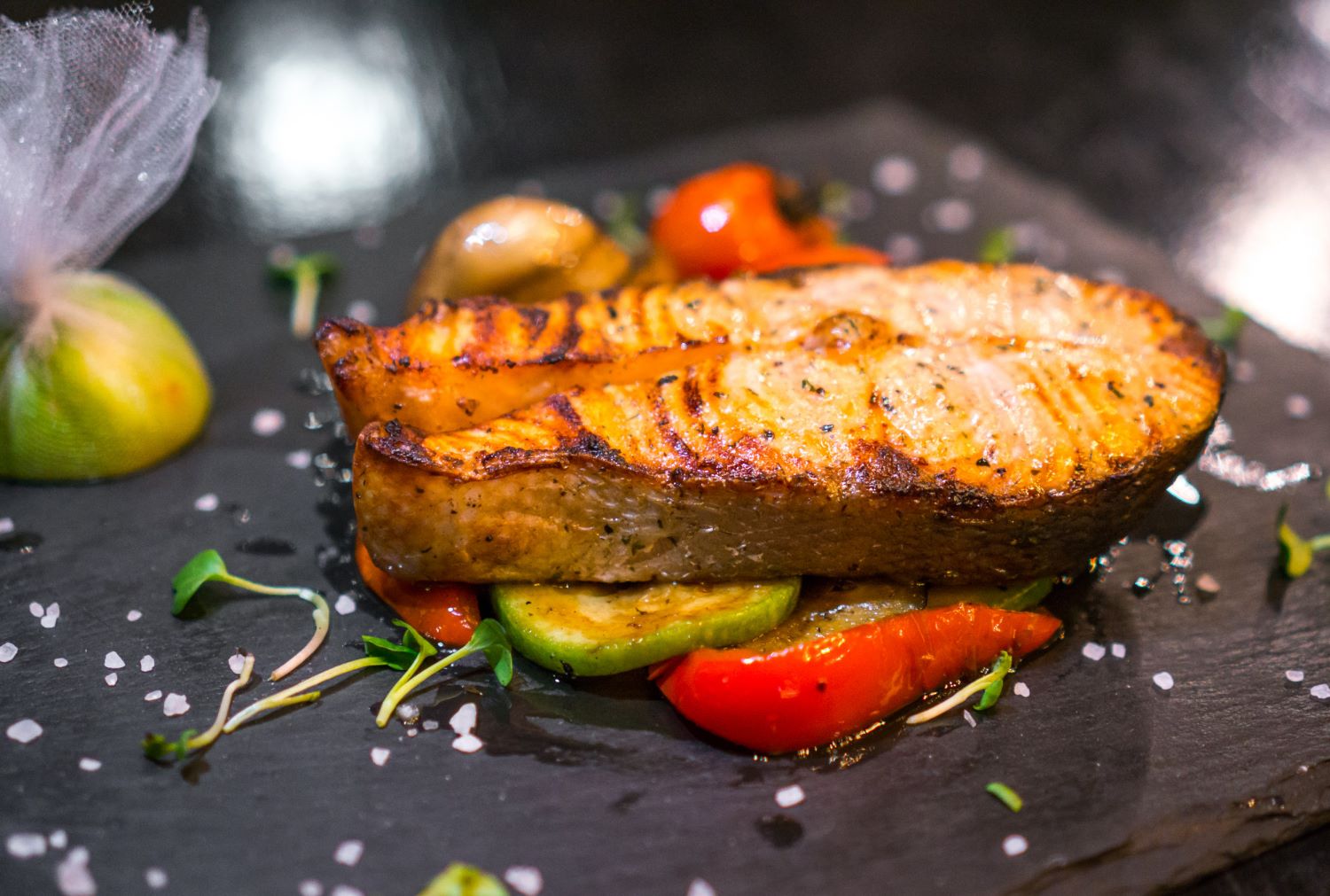
This lemon herb salmon tray bake is a simple Parkinson’s Disease nutrition recipe designed to be nourishing, colourful and easy to prepare. It brings together salmon, sweet potato, courgette, broccoli, olive oil, lemon and fresh herbs in one roasting tray, making it a practical option for a balanced lunch or evening meal.
When creating a Parkinson’s Disease nutrition recipe, I like to focus on meals that feel realistic. Food should not feel complicated, especially when you are already managing symptoms, medication routines, fatigue, constipation, changes in appetite or fluctuating energy levels.
This Parkinson’s Disease nutrition recipe is inspired by a Mediterranean style way of eating. It includes oily fish, vegetables, olive oil and herbs, all of which can form part of a varied and supportive diet. It is not designed to treat Parkinson’s Disease, and it is not a replacement for medical care. It is simply a practical recipe that may help you build more nourishing meals into your week.
Review My Parkinson’s Disease Nutrition Programmes
Why this Parkinson’s Disease nutrition recipe works well
This Parkinson’s Disease nutrition recipe is gentle, colourful and flexible. It uses simple ingredients and does not require lots of pans or complicated steps.
Salmon provides protein and naturally occurring omega 3 fats. Sweet potato provides a soft, comforting carbohydrate along with fibre. Broccoli and courgette add colour, texture and plant variety. Olive oil and herbs help bring the meal together in a Mediterranean style way.
For some people with Parkinson’s Disease, protein timing may need to be considered, especially if levodopa medication feels less predictable around higher protein meals. This does not mean protein should be avoided. Protein is important for muscle, strength and healthy ageing. If you have been advised to follow a specific protein timing approach, enjoy this meal at the time of day that fits your personal plan and discuss changes with your healthcare team.
Ingredients
Serves 2
2 salmon fillets
1 medium sweet potato, peeled and cut into small cubes
1 courgette, sliced into half moons
1 small head of broccoli, cut into small florets
1 tablespoon olive oil
Zest of 1 lemon
Juice of half a lemon
1 teaspoon dried oregano
1 tablespoon chopped fresh parsley
1 tablespoon chopped fresh dill, optional
1 small garlic clove, finely grated, optional
Black pepper to taste
A small pinch of sea salt, optional
1 tablespoon pumpkin seeds, optional
Extra lemon wedges to serve
Need to Know
This Parkinson’s Disease nutrition recipe can be adapted depending on appetite, chewing, swallowing and digestion.
For a softer texture, cut the vegetables smaller and roast them until tender. You can also flake the salmon before serving.
For a gentler flavour, leave out the garlic and use only lemon, olive oil and herbs.
For extra energy, serve with cooked rice, quinoa or a slice of whole grain bread if tolerated.
For constipation support, remember that fibre works best alongside enough fluid, regular meals and movement where appropriate.
For medication timing, speak with your Parkinson’s Disease nurse, doctor or dietitian if you have been told that protein affects your levodopa response.
Method
- Preheat the oven to 190 degrees Celsius.
- Place the sweet potato cubes into a roasting tray. Add half the olive oil, oregano and a little black pepper. Toss well.
- Roast the sweet potato for 20 minutes, or until it begins to soften.
- Remove the tray from the oven and add the courgette and broccoli. Toss gently with the remaining olive oil, lemon zest and garlic if using.
- Place the salmon fillets on top of the vegetables.
- Squeeze over the lemon juice and add the fresh parsley and dill.
- Return the tray to the oven and roast for 12 to 15 minutes, or until the salmon is cooked through and flakes easily.
- Sprinkle with pumpkin seeds if using.
- Serve warm with extra lemon wedges.
Practical nutrition notes
This Parkinson’s Disease nutrition recipe includes a balance of protein, carbohydrate, vegetables and healthy fats. This can make it a helpful meal when you want something satisfying but not too heavy.
The salmon adds protein, which is important for maintaining muscle and strength. The sweet potato provides a soft carbohydrate, which may be useful for energy and meal satisfaction. The vegetables add fibre and plant variety, which can be helpful when supporting gut health and bowel regularity.
Olive oil is a key part of Mediterranean style eating and works well with herbs, lemon and vegetables. Herbs such as parsley, dill and oregano add flavour without needing rich sauces or heavy dressings.
This Parkinson’s Disease nutrition recipe can also be prepared in stages. You can chop the vegetables earlier in the day, then roast everything when you are ready to eat.
Get Support With Your Parkinson’s Disease Nutrition Plan
Why personalisation matters
There is no single perfect Parkinson’s Disease nutrition recipe for everyone. Some people need help with constipation. Others need help maintaining weight, timing protein, managing nausea, supporting energy, improving meal variety or making food easier to prepare.
This is why personalisation matters.
A meal that works well for one person may need adjusting for another. For example, someone struggling with constipation may need more fibre and fluid. Someone with swallowing concerns may need a softer texture. Someone who notices medication fluctuations may need support with protein timing. Someone with a reduced appetite may need more energy dense meals.
The aim is not to follow a perfect diet. The aim is to build a way of eating that supports your symptoms, medication routine, preferences and daily life.
Final thoughts
This lemon herb salmon tray bake is a practical Parkinson’s Disease nutrition recipe that can support a nourishing and enjoyable meal pattern. It is colourful, simple and flexible, which makes it a useful option for busy days or evenings when you want something balanced without too much preparation.
If you are unsure what to eat with Parkinson’s Disease, or you feel confused by advice around protein, constipation, gut health or Mediterranean style eating, personalised support can help you make sense of your options.
Food should feel supportive, not stressful.