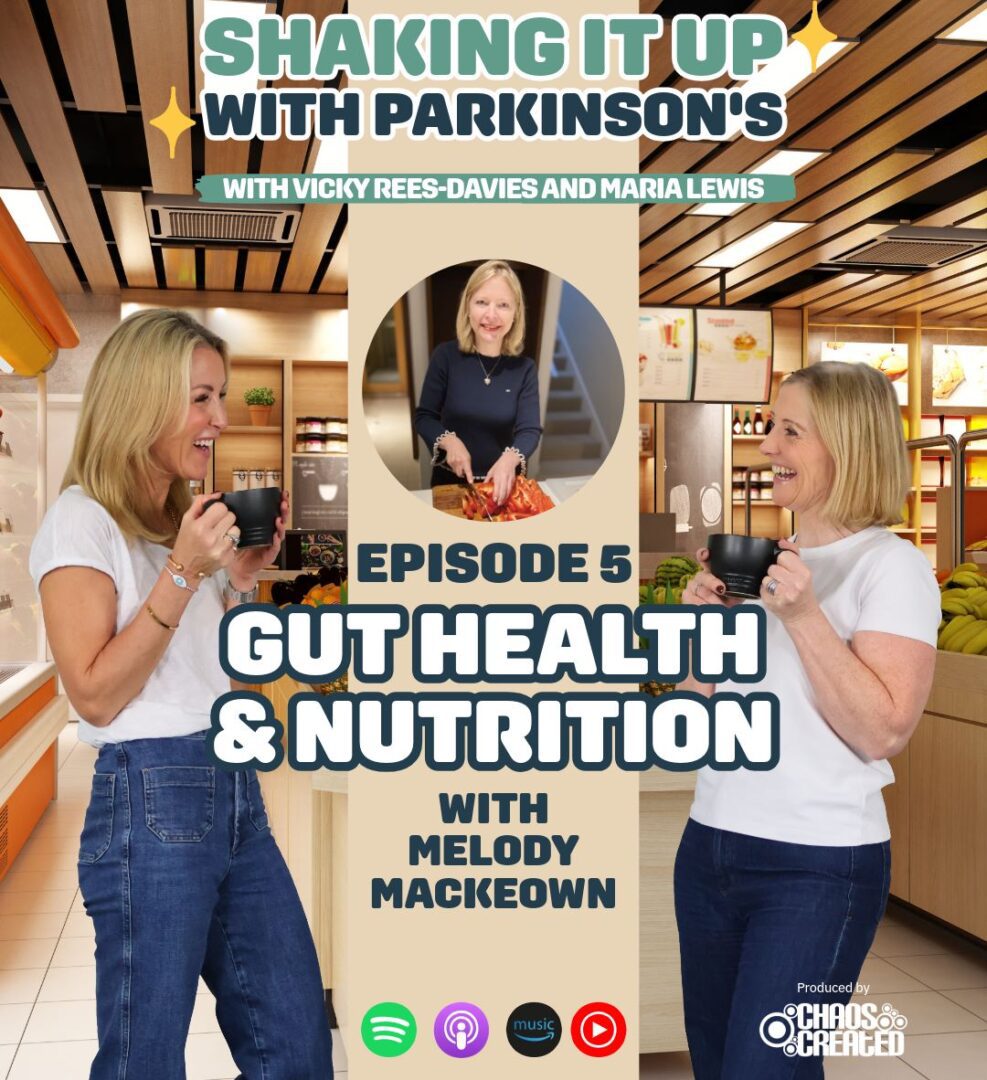
Gut health and Parkinson’s Disease are more closely connected than many people realise, and this was one of the key themes I explored during my recent podcast conversation on Shaking It Up with Parkinson’s.
When we think about Parkinson’s Disease, we often think first about movement symptoms such as tremor, stiffness, slowness and balance. Yet many people living with Parkinson’s Disease also experience digestive symptoms that can have a major impact on daily life. Constipation, bloating, reflux, nausea, appetite changes, fatigue, sleep disruption and medication timing can all become part of the picture.
This is why gut health and Parkinson’s Disease deserves more attention.
The podcast conversation explored why the gut is sometimes called the second brain, how digestion may influence day to day wellbeing, and why nutrition support needs to be tailored to the individual. Food is not a cure for Parkinson’s Disease, and it should never replace medical care. However, nutrition can be an important support tool when it is used carefully and personally.
In this blog, I want to share some of the key themes from that conversation and explain why gut health and Parkinson’s Disease should be considered together when looking at comfort, energy, bowel regularity, food choices and quality of life.
Why Gut Health Matters in Parkinson’s Disease
The digestive system does far more than break down food. It has its own nervous system, communicates with the brain, interacts with the immune system and houses the gut microbiome.
This is one reason gut health and Parkinson’s Disease is such a fascinating and important topic. The gut and brain are in constant communication. This communication involves the enteric nervous system, the vagus nerve and the gut microbiome.
The enteric nervous system helps coordinate movement through the gut, digestive secretions and sensitivity. The vagus nerve acts as a communication pathway between the gut and brain. The gut microbiome includes the many microbes living in the digestive tract, which may influence digestion, immune signalling, inflammation and chemical communication.
For people with Parkinson’s Disease, this matters because digestive symptoms are common and can affect daily comfort. Supporting digestion is not just about the gut. It may also support energy, meal tolerance, medication routines and overall wellbeing.
Constipation and Parkinson’s Disease
Constipation is one of the most common digestive symptoms in Parkinson’s Disease. It can be uncomfortable, frustrating and sometimes dismissed as a minor issue, but it deserves proper attention.
Parkinson’s Disease can affect the nerves involved in gut movement. When movement through the digestive tract slows down, constipation, bloating, abdominal discomfort and a feeling of incomplete emptying may follow.
Constipation can also make a person feel heavy, sluggish and less comfortable after meals. In some cases, slow digestion may affect how predictably medication is absorbed, especially when the stomach empties more slowly.
This is why bowel regularity is an important part of discussing gut health and Parkinson’s Disease. It is not only about going to the toilet. It is about comfort, routine, energy and quality of life.
Practical support may include reviewing fibre intake, hydration, meal rhythm, movement, medication timing and individual tolerance to different foods. However, this needs to be personalised because not everyone responds well to the same fibre rich foods, fermented foods or supplements.
Explore My Parkinson’s Disease Nutrition Programmes
The Gut Microbiome and Parkinson’s Disease
The gut microbiome is a growing area of interest in Parkinson’s Disease research. It refers to the community of bacteria, fungi, viruses and other microorganisms that live mainly in the digestive tract.
These microbes are involved in many important functions. They help break down certain fibres, support the gut lining, interact with the immune system and produce compounds that may influence gut and brain communication.
When discussing gut health and Parkinson’s Disease, the microbiome is important because it may be connected to constipation, inflammation, gut barrier function and non movement symptoms such as fatigue and mood changes.
However, the microbiome is not something we can fix with one food or one supplement. It is shaped by many factors, including diet, medication, stress, sleep, constipation, infections, antibiotic use, age, lifestyle and overall health.
This is why I often encourage people to begin with the foundations. What are you eating most days? Are you getting enough variety? Are you managing constipation? Are you drinking enough fluids? Are you tolerating your current diet? Are you eating enough to maintain strength and weight? Are your meals working alongside medication?
The microbiome is complex, but your first steps can still be practical and achievable.
Probiotics and Prebiotics
In the podcast, we discussed the difference between probiotics and prebiotics because these terms are often used but not always clearly understood.
Probiotics are live microorganisms that may support the gut microbiome. They can be found in some fermented foods and supplements.
Prebiotics are types of fibre and plant compounds that feed beneficial gut microbes. They are often found in plant foods such as vegetables, fruits, oats, pulses, nuts, seeds and whole grains.
Both can be helpful in the right context, but they are not automatically suitable for everyone. Some people feel better when they increase fibre or fermented foods. Others may become more bloated, gassy or uncomfortable, especially if constipation, food sensitivity, reflux or small intestinal bacterial overgrowth is part of the picture.
This is why gut health and Parkinson’s Disease needs a personalised approach. What helps one person may not help another.
Rather than adding lots of supplements at once, it is usually better to make small changes and observe how the body responds. Nutrition should help you feel clearer and more confident, not more confused.
Mediterranean Style Eating and Parkinson’s Disease
Another theme from the podcast was the value of a Mediterranean style diet. This way of eating is often rich in vegetables, fruits, whole grains, pulses, nuts, seeds, olive oil, herbs, spices and good quality protein.
For many people, a Mediterranean style approach can provide a helpful foundation. It can support fibre intake, plant variety, healthy fats, antioxidant intake and microbiome diversity.
However, it is not a strict diet plan. It is a flexible pattern that can be adapted to your symptoms, appetite, medication routine, culture, food preferences and digestive tolerance.
This distinction is important. Gut health and Parkinson’s Disease should not be reduced to a generic food list. One person may need more support with constipation. Another may need help maintaining weight. Another may need protein timing guidance. Another may need gentler fibre choices because their gut is sensitive.
The Mediterranean style diet can be a helpful starting point, but it still needs to fit the person in front of me.
Protein Timing and Parkinson’s Disease Medication
Protein is essential for health. It supports muscle, immune function, repair, strength and healthy ageing. For people with Parkinson’s Disease, protecting muscle and strength can be especially important because movement, balance and exercise capacity all matter.
However, protein timing may be relevant for some people taking levodopa. Protein and levodopa can compete for absorption, which means some individuals notice that their medication works less predictably when it is taken too close to a high protein meal.
This does not mean people with Parkinson’s Disease should avoid protein. In fact, reducing protein too much can be harmful, especially if someone is losing weight, losing muscle, exercising regularly or struggling to maintain strength.
The key is timing, adequacy and individual assessment.
Some people may benefit from adjusting when they eat most of their protein, but this should always be done carefully and ideally with professional guidance. It is not something to guess at, especially if medication response, weight, appetite or symptoms are changing.
Gut health and Parkinson’s Disease is not only about what you eat. It is also about when you eat, how well you digest, how medication fits into your day and how to support energy and strength without creating unnecessary restriction.
Breakfast and Daily Routine
During the podcast, we also explored breakfast and whether there is a perfect breakfast for someone with Parkinson’s Disease.
The honest answer is no. There is no single perfect breakfast for everyone.
For some people, a protein based breakfast may support energy, appetite and blood sugar balance. For others, medication timing means breakfast needs to be planned differently. Some may tolerate oats, berries and yoghurt well. Others may feel better with eggs, avocado, fish, vegetables or another combination.
The best breakfast depends on many factors, including medication timing, digestive symptoms, bowel habits, appetite, weight goals, sleep, energy and personal preference.
This is where practical support can make a difference. You do not need to overhaul your entire diet overnight. Sometimes starting with one meal, such as breakfast, can help create a better rhythm for the day.
Intermittent Fasting and Parkinson’s Disease
Intermittent fasting is a popular topic, and some people wonder whether it could support brain health, digestion or metabolism.
For people with Parkinson’s Disease, intermittent fasting needs to be considered carefully. It may not be appropriate for someone who is underweight, losing weight, experiencing nausea, struggling with blood sugar dips, dealing with fatigue, needing medication with food or finding it hard to meet protein and nutrient needs.
For many people, the first priority is not fasting. It is building a nourishing and consistent way of eating that supports digestion, bowel regularity, energy, medication timing and quality of life.
Once the foundations are in place, other strategies can be considered if appropriate. This should always be done in a safe and personalised way.
Sugar, Alcohol and Caffeine
The podcast also touched on sugar, alcohol and caffeine. These can be sensitive topics because food and drink are emotional, social and personal.
The aim is not guilt. The aim is awareness.
For example, too much sugar may displace more nourishing foods and may contribute to energy dips for some people. Alcohol may affect sleep, hydration, balance and medication tolerance. Caffeine may suit one person but worsen reflux, anxiety, urgency or sleep in another.
There is rarely one rule for everyone. Instead, the question is what your body is telling you.
If sleep is poor, constipation is worse, energy crashes are common or medication feels unpredictable, it may be worth reviewing these areas gently. Small changes can sometimes have a meaningful effect.
Get Support With Your Parkinson’s Disease Nutrition Plan
Why Personalised Nutrition Matters
One of the strongest messages from the podcast conversation is that people with Parkinson’s Disease are individuals.
When you have met one person with Parkinson’s Disease, you have met one person with Parkinson’s Disease.
This is especially true when it comes to nutrition. One person may need support with constipation. Another may need help with bloating or reflux. Another may be losing weight. Another may need support with muscle maintenance, protein timing, sleep, fatigue, swallowing, appetite or food reactions.
Gut health and Parkinson’s Disease gives us an important framework, but the plan must still be personal.
A personalised nutrition plan may consider digestive symptoms, bowel habits, medication timing, appetite, weight changes, energy, sleep, exercise, swallowing, chewing, food preferences, medical history, supplements and current dietary patterns.
The aim is not to make food complicated. The aim is to create a realistic plan that supports the person, their symptoms and their daily routine.
Final Thoughts
Gut health and Parkinson’s Disease are deeply connected through digestion, bowel regularity, the gut microbiome, the nervous system, medication timing and daily wellbeing.
Food will not replace medical treatment, but nutrition can be an important part of a wider support plan. When approached carefully, it may help support comfort, energy, strength, bowel regularity and confidence with food.
If you are living with Parkinson’s Disease and feel confused about what to eat, how to manage constipation, how to time protein, or how to support your gut alongside medication, you do not need to work it out alone.
Personalised nutrition support can help you understand your own body and create a plan that works for your symptoms, your medication routine and your life.