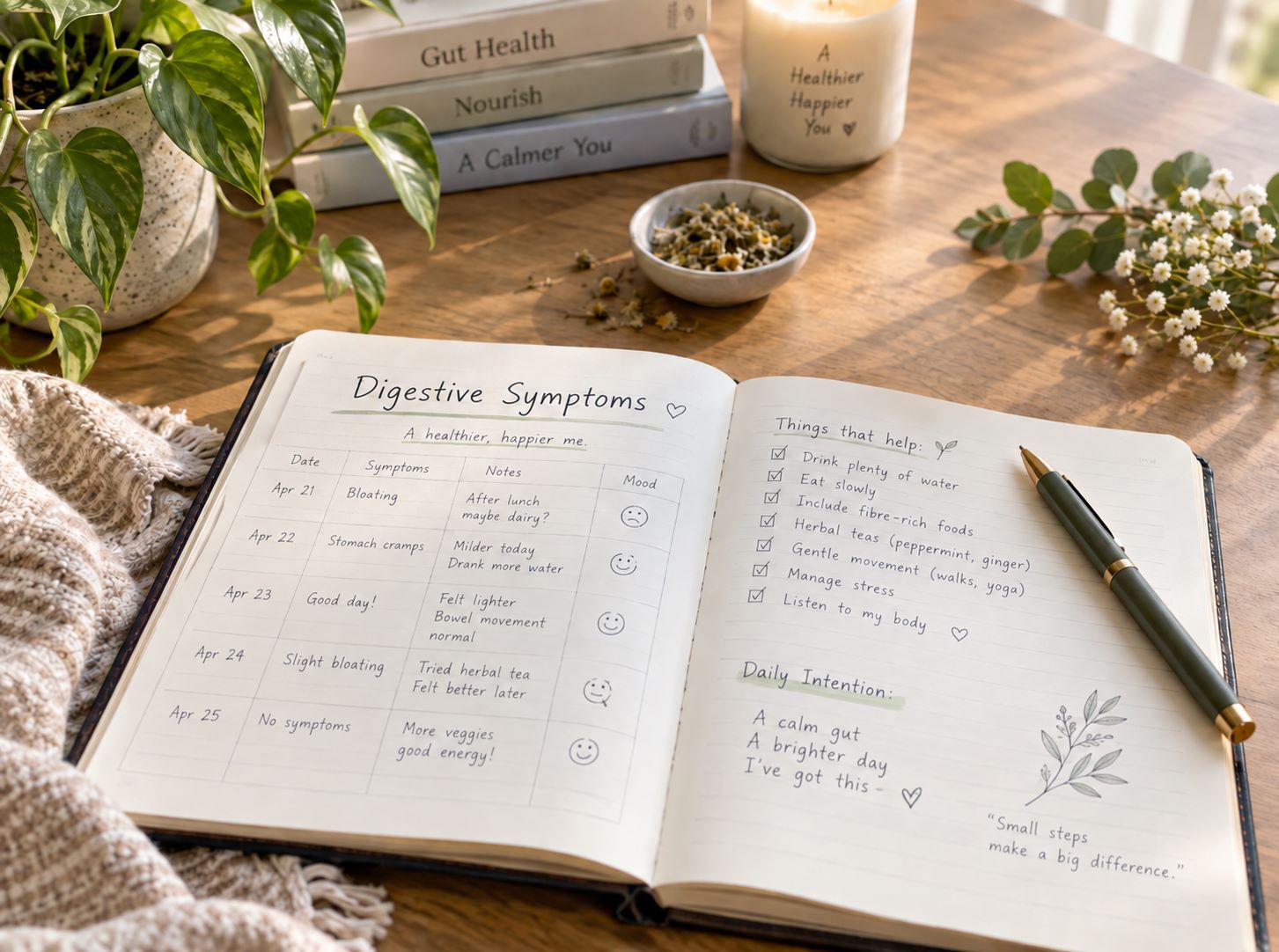
If you have been dealing with bloating, gas, constipation, diarrhoea, reflux or food reactions, you may have wondered whether SIBO could be part of the picture.
SIBO stands for Small Intestinal Bacterial Overgrowth. It happens when there is an abnormal number of bacteria in the small intestine. These bacteria can ferment certain starches and fibres from your food, producing gas and triggering uncomfortable digestive symptoms.
Because SIBO symptoms can overlap with many other digestive issues, testing can be helpful. One of the most commonly used tools is a SIBO breath test.
A SIBO breath test can provide useful information, but it is not the whole story. It needs to be interpreted alongside your symptoms, health history, bowel habits and wider digestive picture.
What is a SIBO breath test?
A SIBO breath test looks at gases produced by bacteria in the digestive tract.
During the test, you drink a test sugar, often lactulose or glucose. If bacteria in the small intestine ferment that sugar, they produce gases such as hydrogen or methane. These gases are absorbed into the bloodstream, carried to the lungs and then measured in your breath.
The test is usually done over a few hours, with several breath samples collected at different time points.
This can help identify whether your gas pattern suggests hydrogen dominant SIBO, methane involvement or a mixed pattern.
What a SIBO breath test can tell you
A SIBO breath test can help show whether there is increased bacterial fermentation happening early enough in the test to suggest small intestinal involvement.
It may help identify patterns such as:
• Hydrogen production
• Methane production
• A combined hydrogen and methane pattern
• A possible flatline pattern that may need further consideration
This information can be useful because different gas patterns may be linked with different symptoms.
Hydrogen patterns are often linked with diarrhoea, alternating bowel habits, abdominal cramping and bloating.
Methane patterns are often linked with constipation, nausea, belching and slower bowel movements.
This does not mean the test gives every answer, but it can help guide the conversation and reduce guesswork.
What a SIBO breath test cannot tell you
A SIBO breath test is useful, but it has limits.
It cannot tell you everything about your gut health. It does not replace a full health history, symptom review or professional interpretation.
A SIBO breath test cannot always explain why SIBO developed in the first place. For example, it may suggest a hydrogen or methane pattern, but it does not fully show whether the underlying driver is poor motility, low stomach acid, poor bile flow, enzyme insufficiency, stress, previous food poisoning, medication use or adhesions.
It also cannot directly test every possible gas pattern. The source material explains that hydrogen sulphide cannot yet be directly measured in the same way as hydrogen and methane. It may be suspected in certain cases, but this requires careful interpretation.
A SIBO breath test also does not diagnose small intestinal fungal overgrowth. This can cause similar symptoms and may sometimes be considered when symptoms do not improve as expected.
Why symptoms alone are not enough
SIBO symptoms can include bloating, gas, constipation, diarrhoea, abdominal pain, belching, flatulence, nausea and reflux.
However, these symptoms can also appear with other digestive issues. This is why symptoms alone cannot confirm SIBO.
For example, bloating may be caused by SIBO, but it may also relate to constipation, food intolerance, stress, poor digestion, coeliac disease, inflammatory bowel conditions, gallbladder problems or other gut imbalances.
Testing can help provide more direction, but it should not be viewed in isolation.
Explore personalised digestive support
Lactulose and glucose breath testing
The documents explain that lactulose is often used as a primary SIBO breath test substrate. However, not every bacteria ferments lactulose equally, which means a lactulose test can sometimes be negative even when symptoms still suggest SIBO.
Some practitioners may also use glucose testing. Glucose can be useful, but it is absorbed earlier in the small intestine, which means it may miss overgrowth further down.
This is why test choice and interpretation matter. A negative result does not always mean there is nothing going on. It may mean the result needs to be viewed alongside symptoms, history and other possible causes.
Why timing matters in a breath test
A SIBO breath test is not only about whether gases rise. It is also about when they rise.
The earlier part of the test is used to assess possible small intestinal fermentation. Later rises may reflect fermentation happening in the large intestine instead.
This is one reason why professional interpretation is helpful. Looking only at the final number may be misleading. The pattern across the whole test matters.
Preparing for a SIBO breath test
Breath test preparation is important because certain foods, supplements, medications or recent treatments may affect the result.
The SIBO documents include preparation guidance such as avoiding antibiotics and colonoscopy before testing, avoiding probiotics, fermented foods and herbal antimicrobials in the week before testing, and avoiding laxatives and digestive aids the day before testing.
Always follow the instructions from the specific laboratory or practitioner arranging your test, as preparation guidelines can vary.
Good preparation helps make the results more useful.
Review my nutrition programmes
Why a stool test is not the same as a SIBO breath test
A stool test can provide helpful information about the large intestine, microbiome balance, inflammation markers, digestion and other gut health factors.
However, the source documents clearly state that stool testing is not diagnostic for SIBO.
This is because SIBO is about bacterial overgrowth in the small intestine, while stool testing reflects what is happening mainly in the large intestine.
This does not mean stool testing is useless. It may still be helpful in the right context, especially when symptoms are complex, but it should not be used as the only way to diagnose SIBO.
Retesting and progress
A SIBO breath test may also be useful after treatment.
The source material explains that retesting can help confirm whether SIBO has cleared, especially if symptoms have not improved enough. It can also help guide next steps if gas levels remain high.
However, symptoms still matter. If a test improves but symptoms remain, it may be important to look for other digestive factors. If symptoms return later, this may suggest relapse or an underlying issue that still needs support.
This is why SIBO is rarely just about one test and one treatment. A wider plan is often needed.
Why interpretation should be personalised
Two people can have similar symptoms but very different test patterns.
One person may have bloating and diarrhoea with a hydrogen pattern. Another may have bloating and constipation with methane involvement. Another may have symptoms that suggest SIBO, but their test may not give a clear answer.
Your history also matters. Previous food poisoning, constipation, medication use, stress, thyroid issues, surgery, food reactions and motility problems may all influence what needs to happen next.
A SIBO breath test can be a helpful piece of the puzzle, but it is not the whole picture.
Final thoughts
A SIBO breath test can help identify hydrogen and methane gas patterns linked with bacterial fermentation in the small intestine. It may help explain symptoms such as bloating, gas, constipation, diarrhoea, nausea and reflux.
However, a SIBO breath test cannot tell you everything. It does not fully explain why SIBO developed, it does not replace professional assessment, it does not directly test for every possible gas pattern and it does not diagnose every digestive issue.
If you are struggling with ongoing bloating or digestive symptoms, testing can be a helpful starting point. The next step is understanding what the result means for you and what support your body may need.
If you would like personalised digestive support, review my nutrition programmes and book a discovery call.